

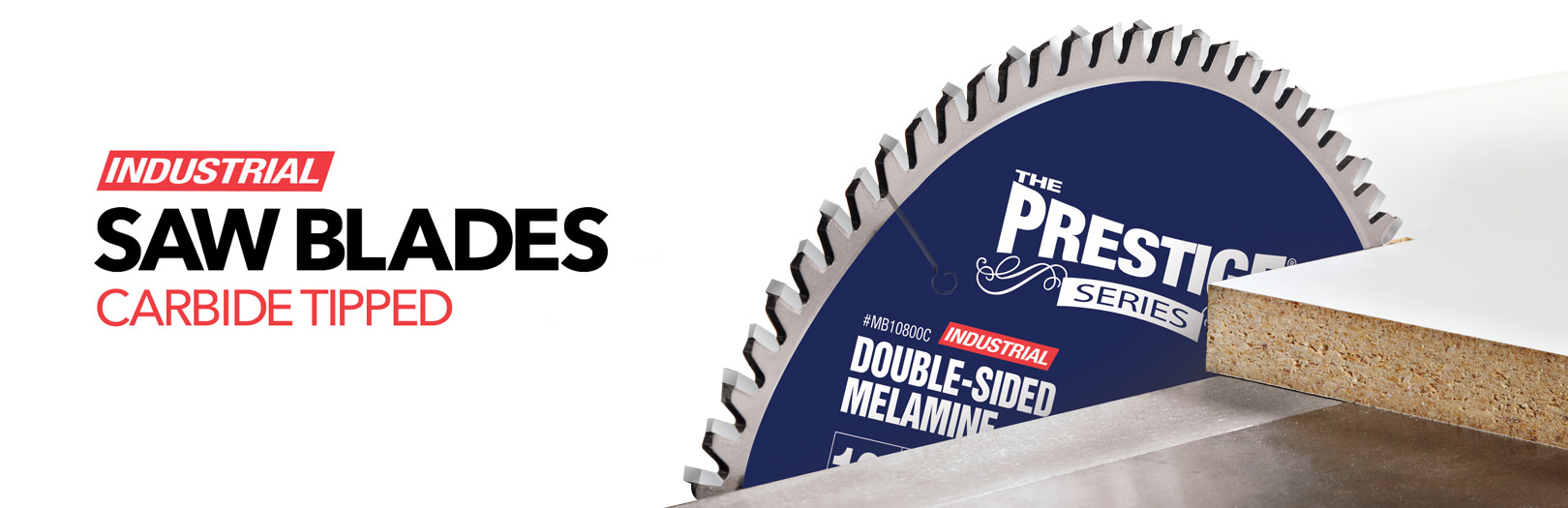
Indicators That Your Carbide Saw Blade Needs Sharpening:
Modern carbide blades can deliver years of smooth, clean, precision cuts when cared for correctly, but even the best tools eventually wear down. When your blade starts showing signs of damage or dullness, it’s time for a refresh. Below are the key signals that your carbide saw blade is ready for sharpening.
-
Cuts show chips or splinters, meaning the blade is no longer slicing cleanly.
-
You smell burning wood, see smoke, or notice scorch marks along the cut.
-
The saw slows down, drags, or sticks instead of moving smoothly.
-
Straight, clean cuts become difficult or uneven.
-
Teeth appear cracked, chipped, or missing.
-
Pitch or residue builds up heavily on the blade and around the teeth.
-
The blade wobbles during use, indicating it is warped.
Should I Resharpen or Replace or My Blade?
A quality carbide blade can usually be sharpened three to four times, and doing so costs far less than buying a replacement. If the blade isn’t warped or severely damaged, sharpening is the smart choice. Just don’t try it yourself. Carbide teeth require precision equipment, expert technique, and an ultra-fine diamond wheel. Anything less can permanently ruin the blade.
True restoration demands exact grinding on all four sides of every tooth. Even a thousandth of an inch off makes the blade cut poorly or not at all, turning a fine 60-tooth blade into something that performs like a rough two-tooth cutter.
Cleaning and checking for flatness are just as important. A blade with pitch buildup or rust won’t cut clean, runs hot, and can damage your saw. And a sharp blade that’s warped will never deliver straight, smooth results.
Contact Us Today for a Free Estimate on our Carbide Saw Blade Sharpening Services