

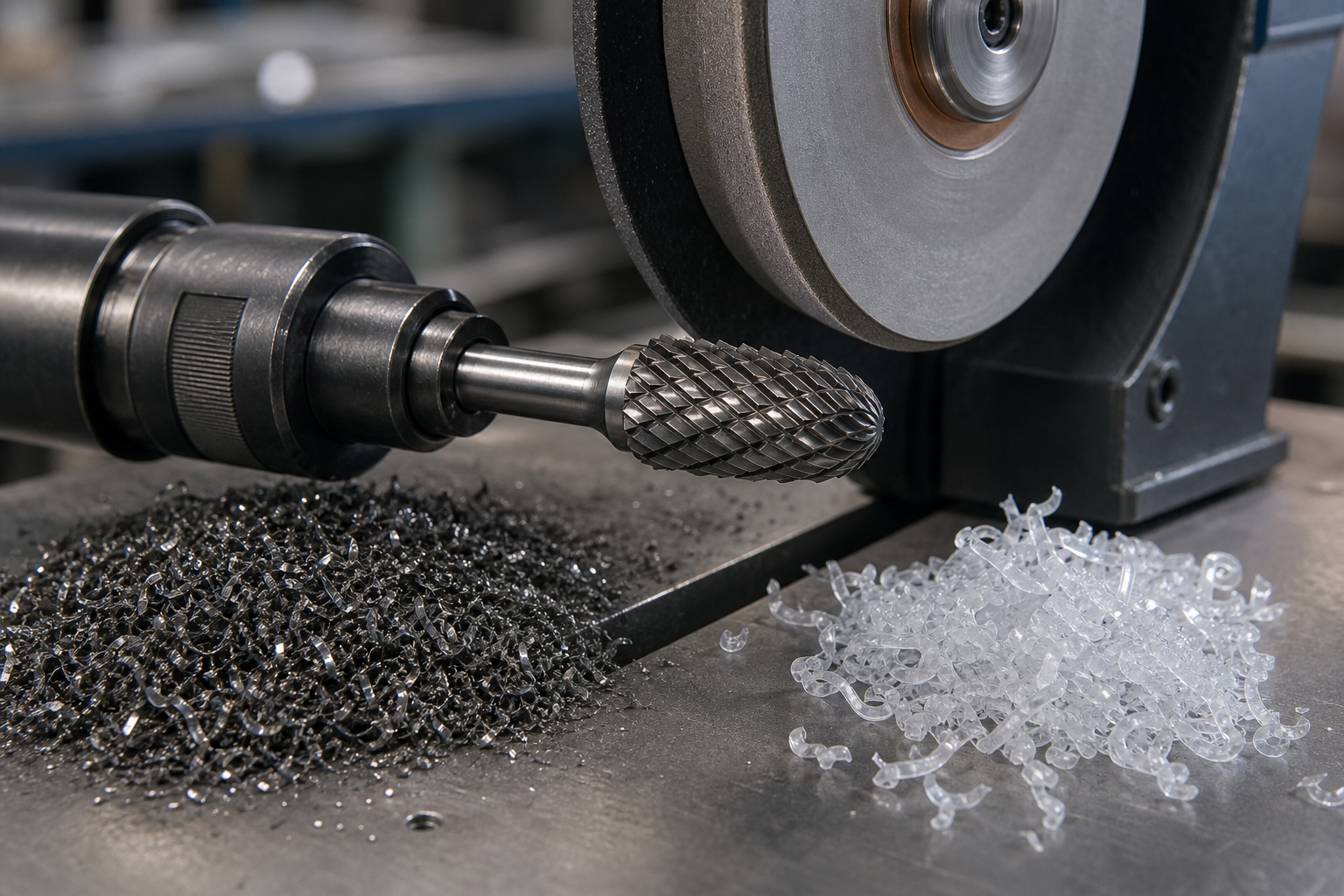
Carbide burrs are built to cut hard, fast, and clean. Whether you use them on metal or plastic, they eventually dull. When that happens, the real question is not whether they can be sharpened. It is whether sharpening is worth the time.
Yes, carbide burrs can be sharpened, but only with the right abrasive, the right touch, and enough care to avoid changing the flute geometry. Tungsten carbide is much harder than standard tool steel, so a normal grinder wheel will not do the job.
What You Need
To sharpen carbide burrs properly, use diamond abrasives. The safest options are diamond wheels, diamond rotary tools, or fine diamond files for light touch-up work. Keep the burr cool and use light pressure. Too much heat can damage the brazed joint or alter the cutting edge.
Sharpening Burrs Used on Metal
When a burr has been used on steel, stainless, or other metals, the goal is to restore the cutting edge without reshaping the flute. Clean the burr first, inspect the flutes for chips, and then make short, light passes with a diamond wheel.
- Clean the burr before grinding
- Inspect for chips or cracks
- Touch only the cutting edge
- Cool the burr often
- Stop as soon as the edge is restored
If you remove too much material, the burr can chatter, cut unevenly, or leave a poor finish.
Sharpening Burrs Used on Plastic
Plastic is different. Burrs used on plastic often look dull because the flutes are loaded with residue, not because the edge is gone. Clean the burr first. If the edge still needs work, sharpen it conservatively.
Heat is the enemy here. Plastic softens quickly, builds up on the tool, and makes the burr seem worn out long before it truly is.
When to Replace Instead
Not every burr is worth saving. If the burr is chipped badly, worn unevenly, or cheap enough to replace without thinking twice, replacement is usually the smarter move.
- Replace low-cost burrs instead of spending time on them
- Replace burrs with damaged flute geometry
- Replace burrs when consistency matters more than squeezing out more life
How to Make Burrs Last Longer
The best sharpening job is the one you do less often. Match the burr to the material, avoid forcing the cut, keep speeds reasonable, and clean the burr as you work. On plastic, clearing residue early matters. On metal, controlling heat matters more.
Final Takeaway
Sharpen carbide burrs when the profile is still good and the cost of resharpening makes sense. Replace them when the damage is too far gone. That balance saves time, preserves finish quality, and keeps the work moving.
If you need help choosing the right burr for metal or plastic, Cutting Tools Chicago can help match the tool to the job.